Science

Nobody Taught Them to Adult — So They’re Teaching Each Other

Across the world, 18th birthdays are a time for celebration. But in India, an estimated 30,000 teens reach this threshold in childcare institutions (places that offer shelter and protection to vulnerable youth) every year, and age out of care to become “nobody’s responsibility,”

Jun 1, 2026Positivity +60
Nobody Taught Them to Adult — So They’re Teaching Each Other

Across the world, 18th birthdays are a time for celebration. But in India, an estimated 30,000 teens reach this threshold in childcare institutions (places that offer shelter and protection to vulnerable youth) every year, and age out of care to become “nobody’s responsibility,” as one person who works to support such teens put it.

Girish Mehta and Anisha Sharma have faced this firsthand. “I had barely a month to figure out my life after I had to move out at 18,” says Mehta, who had lived in a childcare institution (CCIs) in Jaipur since he was 12. Sharma grew up in a Delhi home for children living with HIV and AIDS. When she turned 18, she says she was “mid-course, mid-dream, and on my own. I wasn’t mature enough to cope.”

Under the national Juvenile Justice (Care and Protection of Children) Act, care leavers like Mehta and Sharma are legally entitled to “aftercare” support until the age of 21 — or, in some cases, 23. But in practice, a majority of India’s care leavers receive little or no support when they step into adulthood. “Without guidance and support, many risk once again falling through the cracks,” Veena Lal, who founded Karm Marg, a home for children at risk on the outskirts of Delhi, says.

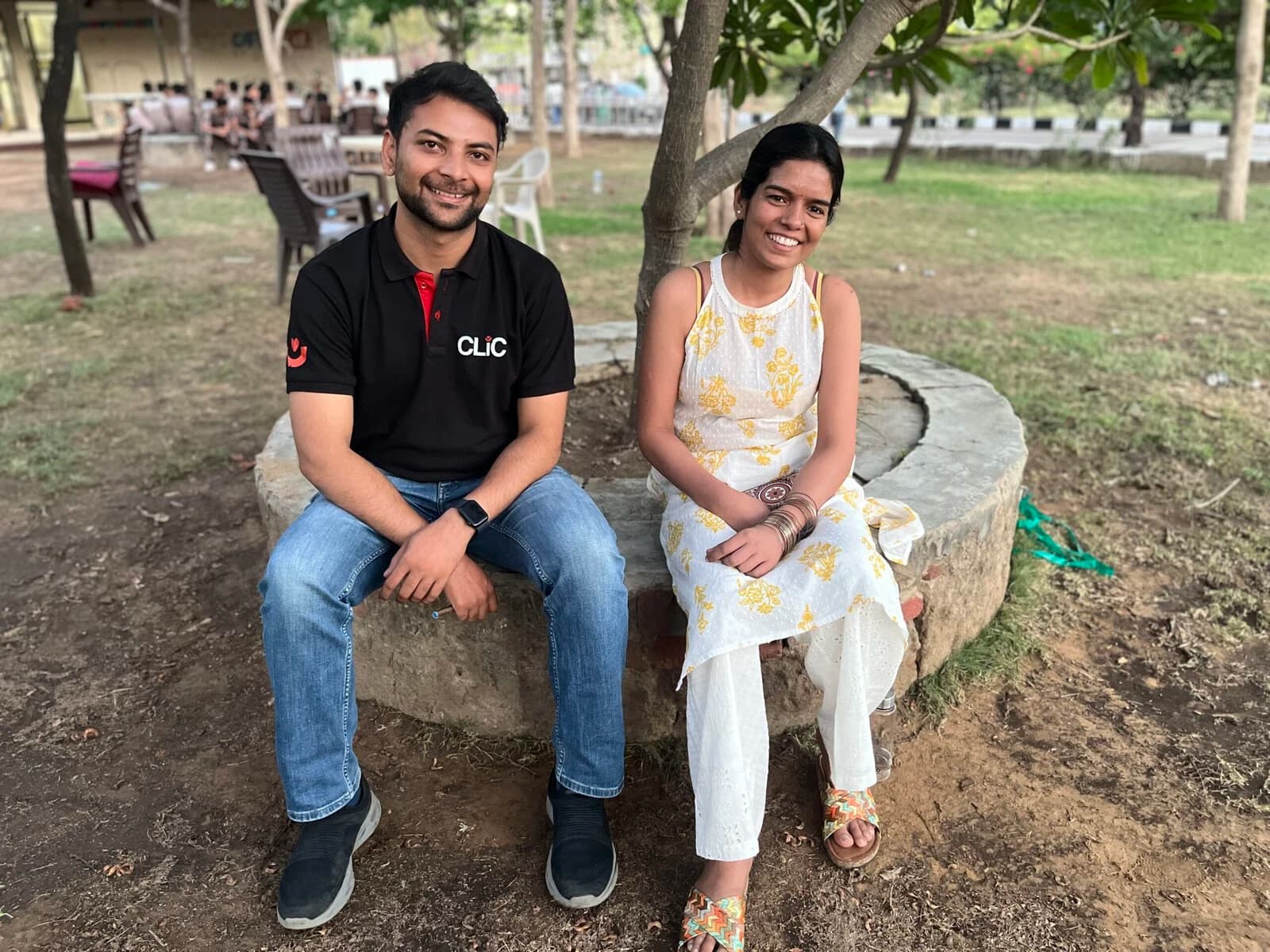
Anisha Sharma and Girish Mehta. Courtesy of CLiC

Mehta and Sharma wanted “to ensure that subsequent generations of care leavers have the support that we lacked,” Sharma says. So they created Careleavers Inner Circle (CLiC), a social impact, tech-enabled startup that is “led by care leavers, for care leavers.” Supported by the United Nations Children’s Fund (UNICEF), they began by building a database of care leavers in Rajasthan. Simultaneously, they developed a tech platform on which care leavers across the country could register. Composed of peers (most CLiC members are care leavers under 30), today, the platform has over 3,200 members, with 14 staff members and dozens of volunteers operating in four Indian states. New members receive a care kit which contains a smartphone, hygiene essentials, clothes and more. They also get access to job openings, courses to improve their professional skills, free counseling and most of all, a supportive community as they begin their journey to adulthood.

Peacocks call as the sun sets. I’m headed to a convention center in Jaipur where many of CLiC’s staffers have gathered from across India for a three-day capacity-building bootcamp. Over glasses of lemonade, the team debates an important question: How long should care leavers be supported?

A 2019 study of care leavers in Rajasthan, Gujarat, Karnataka, Maharashtra and Delhi found that of the 435 respondents, 44 percent had no say in their own care and rehabilitation planning. “Care leavers struggle with everything from university degrees, jobs and housing — but need to make choices about their future themselves,” Sharma says. The obvious solution is to start preparing them from when they’re about 16, but, she adds, “many CCIs are understaffed and cash-strapped, so this isn’t always possible.”

Girish Mehta and Anisha Sharma counseling children in a CCI. Courtesy of CLiC

This is where CLiC comes in. The network has conducted transition preparedness workshops with 16- to 18-year-olds in CCIs and has supported over 1,450 children in care to develop concrete transition plans.

Conversations with future care leavers have been eye-openers. “A boy in a home in Kolkata who was turning 18 in two months was shocked to hear that he’d soon have no roof over his head!” Mausumi Das, who heads CLiC’s operations in West Bengal, says. They helped him mentally prepare for the future and talked him through his options. Some care homes, they have found, encourage care leavers to reunite with their birth families, or if they are girls, to get married.

Weighed down by negative news?

Our smart, bright, weekly newsletter is the uplift you’ve been looking for. [contact-form-7]

Mehta and the CLiC team question both these options as they aim for care leavers to ultimately become self-reliant. Instead, CLiC offers career guidance, help with shared accommodation and peer support via a buddy system. CLiC has also connected care leavers with companies like the Indian fast food company Haldiram’s, which offers three-month training and subsequent employment. In Rajasthan, Uttarakhand and West Bengal, Pratham Education Foundation helps CLiC members to build their skills and access job opportunities. So far, 410 care leavers have gained professional skills through the network; of these, 320 have found jobs.

Das and other CLiC members say that without adequate guidance and emotional support, care leavers risk getting into a host of unsafe situations. The team is still haunted by the case of a teenager in an abusive marriage who called for help, but disappeared before CLiC could reach her and was found dead in a road accident. “Her life could have taken a different course if she’d been guided better,” Mehta says somberly.

Mohsin Sheikh. Courtesy of CLiC

But there is a more fundamental gap that CLiC is trying to fill: Across India, CCIs often fail to help children under their care obtain government-approved identification, voter IDs and bank accounts. Mohsin Sheikh, additional director at CLiC, says that documentation becomes harder once children transition out of the CCI. “As most don’t have families, they can’t provide a permanent address, which is mandatory when applying for the Aadhar card [government ID],” he says. Mehta and Sharma have long advocated for governmental intervention in this. Though the former union minister for Women and Child Development, Smriti Irani, ordered Indian state governments to develop a database of care leavers and help them with getting documented, not much has happened on the ground. In spite of these challenges, CLiC has helped over 600 members secure their documents.

During the workshop, Das shares her story. She grew up in a children’s home in Assam in northeastern India. When she left it in 2016, she felt out of place everywhere. “Everyone other than me seemed to have a family … a home … I found it hard to make friends and build relationships,” she says. “In 2021, when I met other care leavers who’d had similar experiences, it was like a homecoming. … I realized I wasn’t alone.”

Studies on the impact of peer support on young adults suggest that networks built around shared lived experience can reduce loneliness, anxiety and depression — partly because being understood by someone who has “been there” helps replace isolation with a sense of belonging.

This is key to CLiC’s approach. Practicalities aside, what care leavers need the most is emotional and psychological support, says Sharma.

“Children are often mistrustful of the establishment, but open up when they learn we’ve been through this same transition,” Mehta says. “Sometimes, they don’t talk immediately, but call late at night for a heart-to-heart.” Some of CIiC’s members are trained counselors, and are reachable by phone or chat to lend an ear. CLiC members can also use Mpower, an online counseling platform created by the Aditya Birla Education Trust.

“Care leavers always need support,” Das says. “Look at me, I’m 29, but mentally, I still feel like a care leaver!” Even years after leaving the childcare system, care leavers need support at different junctures of their lives, some for medical emergencies (CLiC has a fund to finance these) and others, simply because they need to pivot. Usha is one of them. After leaving institutional care, she got married but was not emotionally equipped to navigate it. When her marriage ended, she was left once again without support or direction. She met members of CLiC, who counseled and supported her, and eventually helped her find work at a bookstore.

On the outskirts of Delhi, children participate in a training session on social media marketing at Karm Marg, the home for at-risk children founded by Veena Lal. Lal says that throughout the year, Karm Marg organizes several such vocational programs that prepare teens for the job market. “We even pay them stipends to become responsible for in-house office work, social media, gardening, et cetera,” she says. Many care leavers end up working here for years after they turn 18.

CLiC members at a capacity-building workshop. Courtesy of CLiC

The home has also bailed numerous care leavers out of sticky situations and medical emergencies. For Lal and others running similar childcare institutions, the continued aftercare of adults who have grown up there is a reality, but one that requires extra time, energy, money — things that the perpetually exhausted Lal has in short supply. “The issue is, if they never leave the home, will they ever be truly independent?” she asks.

By contrast, CLiC’s tech interface enables it to service many more care leavers efficiently, and its volunteer-driven model is relatively easy to scale. Funding is a challenge, however, and much of Mehta and Sharma’s time is spent on developing corporate and social partnerships. “But by connecting them to companies who train them and eventually hire them as well, we’re helping our members become truly independent,” Mehta says. “And yet we stay emotionally connected with them, just like a family would.”

Wait, you're not a member yet?

Join the Reasons to be Cheerful community by supporting our nonprofit publication and giving what you can.

Join Cancel anytime

Back in Jaipur, the workshop is winding down. Participants exchange hugs, promise to stay in touch. Others linger in small groups, making plans to celebrate upcoming festivals together. “These connections with people whose experiences have been just like my own are truly precious,” Das says. “I don’t feel so lonely any more.”

This good news was originally reported by Reasons to be Cheerful.

Read the full story at the source →

More good news